
What Is Bac Water? Bacteriostatic Water Explained (Australia)

| What it is | Sterile water with 0.9% benzyl alcohol |
|---|---|
| What the benzyl alcohol does | Inhibits new bacterial growth, allowing repeat entry |
| Bacteriostatic vs bactericidal | Stops growth, does not kill existing bacteria |
| Used for | Reconstituting lyophilised research peptides |
| Storage, sealed | Room temperature, away from light and heat |
| Storage, opened | Refrigerated, within the working life on the label |
| Vial sizes supplied | 3ml and 10ml |
Bac water is short for bacteriostatic water: sterile water with 0.9% benzyl alcohol added as a preservative. That 0.9% is the whole point. It stops new bacterial growth, which is what lets one vial be entered many times instead of being thrown away after a single draw.
It is the standard liquid for reconstituting lyophilised research peptides. This guide covers what is in it, how it differs from plain sterile water and saline, how much you need, how to store it, and the technique that still matters even with a preservative in the vial.
On this page
What is in it | vs sterile water and saline | How much you need | Storage | Technique | Misconceptions | FAQs
Key points at a glance
- Bac water is sterile water containing 0.9% benzyl alcohol as a preservative
- The preservative inhibits new bacterial growth. It does not clean up a solution that is already contaminated
- Plain sterile water has no preservative and is single use. Saline is a different diluent again
- It is the standard reconstitution liquid across every peptide category
- Store sealed vials at room temperature and refrigerate once opened
- Supplied by PhaseOne in 3ml and 10ml vials
What is in bac water
Two things: sterile water for injection, and benzyl alcohol at 0.9% concentration. Nothing else.
Bacteriostatic means it stops bacteria multiplying. It is not bactericidal, which would mean killing what is already there. The distinction matters in practice: the preservative keeps a sterile vial sterile through repeated entries, and it cannot rescue a vial that has already been contaminated.
0.9% is the standard concentration across pharmaceutical-grade bacteriostatic water. It is enough to do the job without adding meaningful chemical complexity to whatever you reconstitute with it.

Bac water vs sterile water vs saline
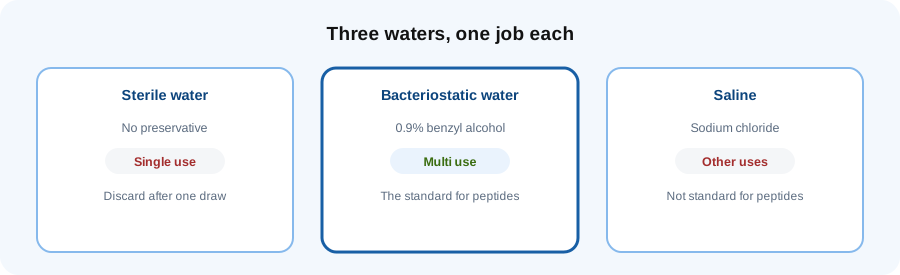
These get used interchangeably in conversation and they are not interchangeable in practice.
| Contains | Use | Suits peptide reconstitution | |
|---|---|---|---|
| Sterile water for injection | Water only | Single use | No, once opened it should be discarded |
| Bacteriostatic water | Water plus 0.9% benzyl alcohol | Multi use | Yes, this is the standard |
| Saline | Water plus sodium chloride | Other applications | No, standard guidance is not built around it |
A small number of poorly soluble peptides need a dilute acid rather than bac water. Our bacteriostatic water vs acetic acid guide covers which and why.
How much bac water do you need
That depends on the vial you are reconstituting and the concentration you want. A rough guide for planning an order: a 3ml vial covers one or two standard 10mg peptide vials, and a 10ml vial covers a longer run or several peptides at once.
| Peptide vial | Common water volume | Resulting concentration |
|---|---|---|
| 5mg | 2ml | 2.5mg per ml |
| 10mg | 2ml | 5mg per ml |
| 20mg | 4ml | 5mg per ml |
| 50mg (GHK-Cu) | 5ml | 10mg per ml |
| 80mg (KLOW) | 5ml | 16mg per ml |
Work out exact volumes with the peptide dosage calculator , and see the reconstitution guide for the technique itself.
Storing bacteriostatic water
Sealed vials keep at room temperature, away from direct light and heat. Once a vial has been punctured, refrigerate it and treat the preservative as having a working life rather than an indefinite one. Manufacturer guidance on the vial is the reference, not a rule of thumb.
That timeframe is separate from the life of a reconstituted peptide, which is governed by the peptide's own stability. Our storage guide covers the peptide side.
Technique at every draw
The preservative reduces risk. It does not replace aseptic technique, and treating it as if it does is the most common misuse of the product.
- Swab the stopper with an alcohol wipe before every puncture and let it dry
- Use a fresh sterile syringe and needle for each draw
- Do not reuse a needle between vials
- Check the water is clear before drawing, and discard it if it is not
The Starter Kit includes bac water, 1ml syringes and alcohol wipes together, or the Syringe Kit has the syringes and wipes if you already have water.
Benzyl alcohol, and why the amount matters
Benzyl alcohol is well tolerated at 0.9% in the volumes normally used, but the exposure is cumulative across a session rather than per draw. Protocols using unusually large reconstitution volumes should treat it as a variable in the design rather than an invisible ingredient.
Common misconceptions
The first is that bac water can sterilise something already contaminated. It cannot, and a cloudy or discoloured solution is not recoverable with it. The second is that bac water and sterile water are the same thing with different labels: the missing preservative is precisely why plain sterile water is single use. The third is treating the preservative as a substitute for clean technique, when it is a backstop to it.
Where bac water fits in the workflow
It is the first input. Bac water goes into the peptide vial during reconstitution , the volume you choose sets the concentration used by the dosage calculator , and what comes out of that feeds the handling rules in the storage guide . Those four steps are the whole practical chain for any lyophilised peptide.
Buying bacteriostatic water in Australia
PhaseOne supplies bacteriostatic water in 3ml and 10ml vials , dispatched from Sydney with tracking alongside the rest of your order. The 10ml vial is the better value if you are reconstituting more than one or two peptides.
It is also included in the Starter Kit , with syringes and alcohol wipes, which is usually the cheaper way to buy it for a first setup.
Related guides
For the mixing process, see the reconstitution guide . For storage after mixing, see the storage guide . For when a dilute acid is needed instead, see the bac water vs acetic acid guide . For purity testing of the peptide itself, see the HPLC testing guide .
Frequently Asked Questions
What is bac water?
Bac water is bacteriostatic water: sterile water containing 0.9% benzyl alcohol as a preservative. It is the standard liquid for reconstituting lyophilised research peptides.
What is in bac water?
Sterile water for injection and benzyl alcohol at 0.9%. Nothing else. The benzyl alcohol is the preservative that allows repeat entry into the same vial.
What does bacteriostatic mean?
It means inhibiting bacterial growth rather than killing bacteria. Bactericidal would mean killing them. Bac water keeps a sterile vial sterile; it cannot decontaminate one.
What is the difference between bac water and sterile water?
The preservative. Plain sterile water has none, so it is single use. Bac water's benzyl alcohol allows a vial to be entered repeatedly across several sessions.
Can I use saline instead?
Standard reconstitution guidance is written around bacteriostatic water. Saline is a different diluent with different variables and is not the standard choice for peptides.
How much bac water do I need?
It depends on the vial and concentration. As a guide, 2ml into a 10mg vial gives 5mg per ml. A 3ml vial of water covers one or two peptide vials; a 10ml covers several.
How should bac water be stored?
Sealed vials at room temperature away from light and heat. Once punctured, refrigerate it and follow the manufacturer's working life on the label.
How long does an opened vial last?
A defined period under refrigeration rather than indefinitely. Check the vial label, and remember this is a separate timeframe from the life of the reconstituted peptide.
Does bac water expire?
Yes. Sealed vials carry an expiry date, and once opened the preservative has a working life. Discard rather than guess if either has passed.
Do I still need sterile technique?
Yes. Swab the stopper before every puncture and use a fresh syringe and needle each time. The preservative is a backstop, not a replacement for technique.
Can bac water fix a contaminated vial?
No. It inhibits new growth only. A cloudy or discoloured solution should be discarded rather than salvaged.
Is bac water used for every peptide?
Almost all of them. A small number of poorly soluble peptides need a dilute acid instead, which the bac water vs acetic acid guide covers.
Where can I buy bac water in Australia?
PhaseOne supplies it in 3ml and 10ml vials, shipped Australia-wide from Sydney, and it is included in the Starter Kit with syringes and alcohol wipes.
Disclaimer
All products supplied by PhaseOne are intended strictly for laboratory research purposes only. Products are not intended for human consumption, therapeutic use, cosmetic use, veterinary use, or diagnostic applications.
