
How to Reconstitute Peptides: Step-by-Step Australian Guide

| What reconstitution is | Returning lyophilised peptide powder to liquid form |
|---|---|
| Diluent used | Bacteriostatic water (0.9% benzyl alcohol) |
| Adding the water | Slowly, down the inside wall of the vial |
| Mixing technique | Gentle swirling only, never shaking |
| Typical dissolution time | Seconds to several minutes, depending on the peptide |
| After mixing | Refrigerate promptly, never freeze |
| Solution check | Clear, with no particles or cloudiness |
To reconstitute a peptide means to turn the freeze-dried powder in the vial back into a liquid by adding bacteriostatic water. Reconstitution is that process, and it is the step where most avoidable damage happens: water added too fast, or a vial shaken instead of swirled.
This guide covers the technique step by step, what you need before you start, how much water to add, how to handle specific peptides such as Retatrutide and the GLOW and KLOW blends, and what to do once the solution is mixed.
On this page
What reconstitute means | What you need | Step by step | How much water | Specific peptides | After mixing | Common mistakes | FAQs
Key points at a glance
- Reconstitution turns lyophilised peptide powder into a liquid solution using bacteriostatic water
- Add the water slowly, down the inside wall of the vial, never straight onto the powder
- Swirl gently until clear. Shaking applies mechanical stress and can disrupt the peptide
- The volume of water you add sets the concentration, which sets every dose calculation after it
- Refrigerate promptly once dissolved, and never freeze a reconstituted solution
- The technique is identical for single peptides and for blends such as GLOW and KLOW
What reconstitute actually means
Peptides are shipped lyophilised, which means freeze-dried to a stable powder. To reconstitute that powder is to add a liquid and return it to solution, so it can be measured and drawn accurately. Reconstitution is the name for the whole process.
The peptide does not change chemically when you reconstitute it. What changes is its physical state, from a stable dry powder to a less stable liquid, which is why the clock on its usable life starts at this point rather than when the vial arrives.
The liquid used is almost always bacteriostatic water , sterile water containing 0.9% benzyl alcohol. A small number of poorly soluble peptides need a dilute acid instead, which our bacteriostatic water vs acetic acid guide covers.
What you need before you start
- A vial of lyophilised peptide
- Bacteriostatic water, 3ml or 10ml
- A sterile syringe, usually 1ml, for adding the water and drawing the solution
- Alcohol prep pads for swabbing both stoppers before every puncture
- A sharps container for used needles
The Starter Kit covers all of it in one order: syringes, alcohol wipes and a vial of bacteriostatic water. If you already have bac water, the Syringe Kit has the BD Ultra-Fine 1ml syringes and wipes on their own.
Step-by-step reconstitution process
Swab the rubber stopper on both the bacteriostatic water vial and the peptide vial with an alcohol pad, and let them dry for a few seconds. Draw your chosen volume of water into the syringe.
Insert the needle into the peptide vial at an angle so the water runs down the inside wall of the glass rather than landing directly on the powder. Push the plunger slowly. A fast, direct stream is the single most common way to damage the material before you have even started.
Withdraw the needle, then swirl the vial gently, rolling it between your fingers, until the powder has fully dissolved and the solution is clear. Do not shake it.
Some peptides clear in seconds, others take a few minutes of intermittent swirling. Patience is the correct response to a slow one, not force or heat.
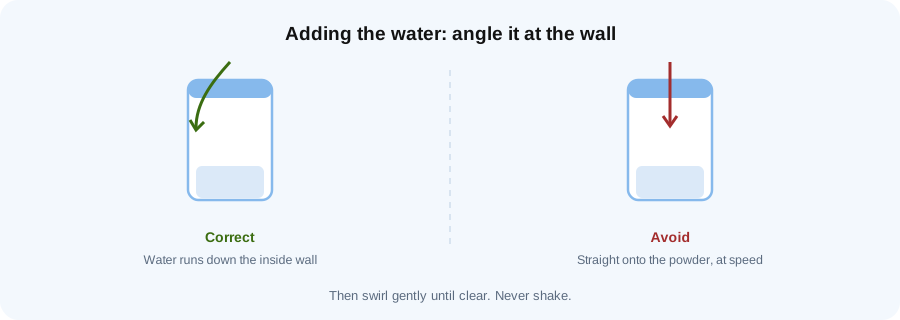
Why technique matters
Peptides are fragile relative to the forces a syringe can apply. A direct stream onto dry powder, or vigorous shaking afterwards, introduces mechanical stress and air that can disrupt structure. The risk rises with the size of the molecule, which is why longer chains such as HGH 191AA and Tesamorelin deserve a gentler hand than a short peptide. Careful technique costs nothing and protects material you have already paid for.
How much bacteriostatic water to add
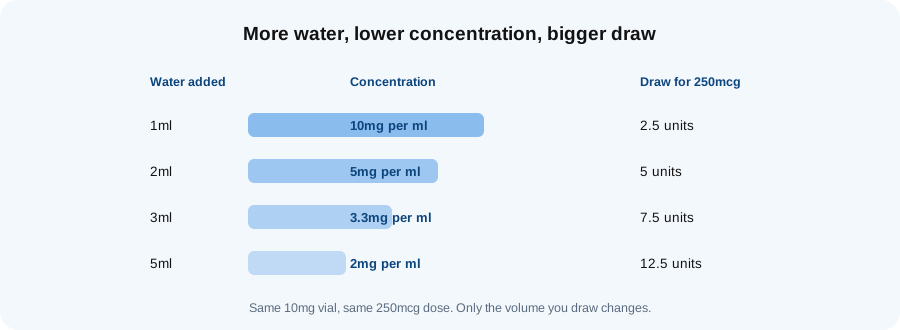
There is no single correct volume. The amount of water you add sets the concentration of the finished solution, and the concentration sets how much you draw for a given dose. More water gives a weaker solution and a larger, easier to read draw. Less water gives a stronger solution and a smaller draw.
A worked example on a 10mg vial: add 2ml and you have 5mg per ml, so a 250mcg draw is 0.05ml, which is 5 units on a 1ml insulin syringe. Add 5ml to the same vial and the draw becomes 12.5 units for exactly the same dose.
Rather than doing this by hand each time, use our peptide dosage calculator , which covers single peptides and blends and shows the unit mark to draw to.
How to reconstitute specific peptides
The technique below is the same for every compound in the range. What changes is the volume, because vial sizes differ.
| Peptide | Vial | Common water volume | Resulting concentration |
|---|---|---|---|
| Retatrutide | 10mg | 2ml | 5mg per ml |
| BPC-157 | 5mg | 2ml | 2.5mg per ml |
| TB-500 | 10mg | 2ml | 5mg per ml |
| BPC-157 + TB-500 blend | 20mg | 3ml | 6.7mg per ml |
| GLOW blend | 70mg | 5ml | 14mg per ml |
| KLOW blend | 80mg | 5ml | 16mg per ml |
How to reconstitute Retatrutide is the most common version of this question. The answer is the standard process: 2ml of bacteriostatic water into a 10mg vial, angled at the wall, swirled until clear, refrigerated straight after. The Retatrutide research guide has the volumes for every vial size from 5mg to 60mg.
Shop the peptides above: Retatrutide , BPC-157 , TB-500 , GLOW , KLOW .
Reconstituting multi-peptide blends
Blends behave the same way in the vial. The extra consideration is that a blend holds several peptides at different milligram ratios, so the draw volume that delivers a given dose of one component will not deliver the same dose of another. Work each component out separately on the blends tab of the calculator. Where the components differ in handling sensitivity, apply the most careful requirement to the whole vial.
Allowing time for full dissolution
Short peptides often dissolve on the first swirl. Longer or more complex sequences can take several minutes of intermittent gentle swirling. Warming the vial or shaking it to speed things up trades a few minutes for a risk to the material, which is a poor trade. Give it time at room temperature and it will clear.
Temperature during mixing
Use bacteriostatic water at room temperature rather than chilled. A large temperature differential adds a variable without adding any benefit to dissolution. Once the solution is clear, move it to the fridge promptly.
After reconstitution: what to do next
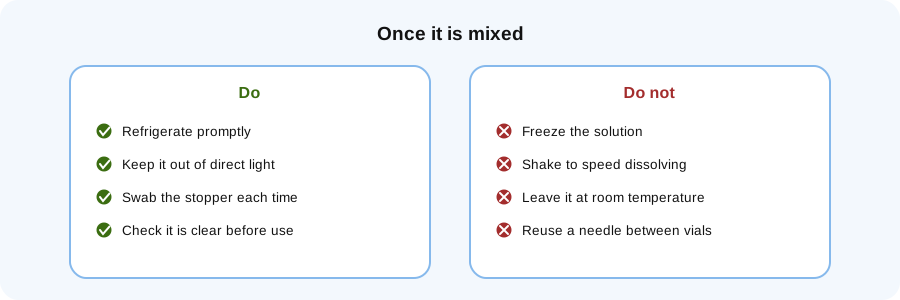
Refrigerate the vial rather than leaving it on the bench, and do not freeze it. Freeze-thaw cycling forms ice crystals that can damage peptide structure, which is the opposite of what the careful technique above was protecting.
Keep it out of direct light, swab the stopper before every subsequent puncture, and check the solution is still clear each time. Our storage guide covers stability in detail, including how long a reconstituted vial stays usable.
Multiple punctures and stopper integrity
Every needle through the stopper leaves a small hole that mostly reseals. Over many sessions those punctures accumulate and the seal degrades, which is worth keeping in mind on larger vials drawn from repeatedly. Swab before each entry, and treat any change in the appearance of the solution as a reason to stop and check the batch rather than push on.
Checking the reconstitution worked
A correctly reconstituted solution is clear, with no particles, cloudiness or colour. Anything else points either to technique during mixing or to a problem with the original material, and is a reason to re-read the batch Certificate of Analysis before going further.
Common reconstitution mistakes
- Injecting water straight onto the powder at speed instead of down the wall
- Shaking the vial to speed up dissolution rather than swirling
- Using plain sterile water or saline instead of bacteriostatic water
- Leaving the reconstituted vial at room temperature instead of refrigerating it
- Freezing a reconstituted solution
- Changing the water volume without recalculating the draw
- Reusing a needle across vials
Why bacteriostatic water specifically
The 0.9% benzyl alcohol in bacteriostatic water inhibits bacterial growth, which is what allows a vial to be entered more than once. Plain sterile water has no preservative and is single use, so it is a poor match for a vial you will draw from over several sessions. The bacteriostatic water guide covers the full rationale, and we supply it in 3ml and 10ml vials .
How reconstitution relates to purity
Technique does not change the purity of what is in the vial, but it can undo the benefit of good material. A batch tested at 99% or higher is only as useful as the handling that follows it. Every PhaseOne batch is independently HPLC tested and the Certificate of Analysis for that batch is published in our public COA library , so you can check the result before ordering. See the HPLC testing guide for how to read one.
Related guides
For the diluent, see the bacteriostatic water guide . For what happens after mixing, see the storage guide . For volumes and draw amounts, use the peptide dosage calculator . For purity verification, see the HPLC testing guide . For the full range, browse research peptides .
Frequently Asked Questions
What does reconstitute mean?
To reconstitute a peptide is to add liquid to the freeze-dried powder so it returns to solution and can be measured and drawn. For research peptides that liquid is bacteriostatic water.
What is reconstitution?
Reconstitution is the process of turning a lyophilised peptide back into a liquid at a known concentration. It sets the strength of the solution and starts the clock on its usable life.
How do you reconstitute peptides?
Swab both stoppers, draw your chosen volume of bacteriostatic water, inject it slowly down the inside wall of the peptide vial, then swirl gently until the solution is clear. Refrigerate once dissolved.
How do you reconstitute Retatrutide?
The same way as any single peptide. A common starting point is 2ml of bacteriostatic water in a 10mg vial, which gives 5mg per ml. Add the water at the wall, swirl rather than shake, and refrigerate once clear.
How much bacteriostatic water should I add?
Whatever volume gives you a concentration you can measure comfortably. More water means a weaker solution and a larger draw; less means a stronger solution and a smaller draw. The dosage calculator works it out for any vial size.
Can I reconstitute a blend the same way?
Yes, the technique is identical. The difference is in the maths: a blend holds several peptides at different ratios, so each component needs its own draw calculation.
What liquid is used to reconstitute research peptides?
Bacteriostatic water, sterile water containing 0.9% benzyl alcohol, which lets the vial be entered more than once.
How should water be added to a peptide vial?
Slowly, at an angle, so it runs down the inside wall of the glass. Never injected directly onto the powder at speed.
Should I shake a peptide vial to help it dissolve?
No. Gentle swirling is correct. Shaking adds mechanical stress and air, and can disrupt peptide structure, particularly in larger molecules.
How long should a peptide take to dissolve?
Anywhere from seconds to a few minutes depending on the compound. Intermittent gentle swirling is the answer to a slow one, not heat or force.
Should bacteriostatic water be chilled before use?
No. Use it at room temperature for mixing, then refrigerate the finished solution.
What should reconstituted peptide solution look like?
Clear, with no particles, cloudiness or colour. Anything else is a reason to stop and check the batch Certificate of Analysis.
What should I do immediately after reconstituting?
Refrigerate it. Do not freeze it, since freeze-thaw cycling can damage the peptide.
Can I use saline instead of bacteriostatic water?
Standard handling guidance is written around bacteriostatic water. Saline and plain sterile water bring different stability and contamination considerations, and plain sterile water has no preservative for repeat entry.
Does reconstitution affect peptide purity?
It does not change the purity of the material, but poor technique can damage it or introduce contamination after the fact. The batch Certificate of Analysis in our COA library tells you what you started with.
Disclaimer
All products supplied by PhaseOne are intended strictly for laboratory research purposes only. Products are not intended for human consumption, therapeutic use, cosmetic use, veterinary use, or diagnostic applications.
